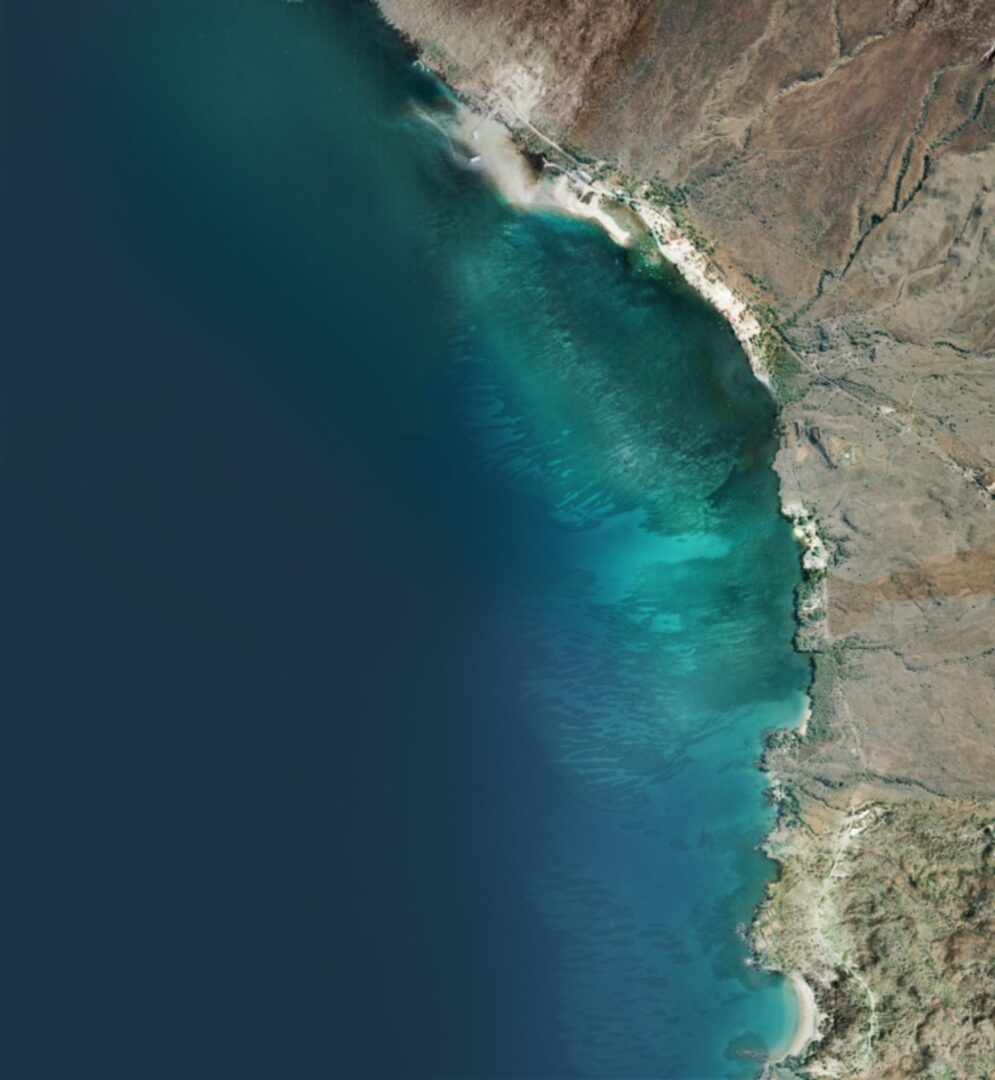
According to Wikipedia, Parablennius is a diverse genus of combtooth blennies found in the Atlantic, western Pacific, and Indian Ocean. Parablenius are confirmed to be present here in Kawaihae Harbor, Hawaii, US. However, the species observed here is in doubt.
Two fish species—the Tasseled Blenny (Parablennius thysanius), recorded in Hawaii, and the Horned Blenny (Parablennius intermedius)—might have been confused. Parablennius intermedius has only been recorded in Australia, New Caledonia, Papua New Guinea, and the Solomon Islands. I am an amateur, and the following is just my opinion. The PDF document below serves as a supplement to the post mentioned here. It was also added as part of the discussion on iNaturalist regarding its observations. You can read more here.
Below is the PDF version. Its full text is duplicated further below.
Parablennius thysanius ? and P. thysanius comparison


This Parablennius was possibly misidentified in iNaturalist as P. thysanius. Here are some reasons why this animal is likely a P. intermedius.
- Its horns are more straightforward than the tasseled horns of P. Thysanius.
- It has dark cheeks with a thin line above at the level of its eye.
- Its body markings differ from P.thysanius, with more distinct dark spots organized into squares or clover shapes. P. thysanius has more spots continuing from its head past the pectoral fins.
- This animal’s pectoral fin base is mottled with white and black patches.
- Its dorsal fins are transparent with seven spines and a white patch at the start. P. Thysanius has a blue on black patch at the start of its dorsal fin.
P. Thysanius, Tasseled Blenny, has been documented in Hawaii, while P. intermedius, Horned Blenny has not.
Parablennius thysanius ? and P. intermedius comparison 1


Parablennius thysanius ? and P. intermedius comparison 2


These comparisons are based on my observation of an animal in Hawaii. I have two fair-quality photos of the animal’s left side and a poor-quality photo of the animal looking from above. I utilized observations from research-grade representations of Parablennius thysanius and intermedius contributed by the iNaturalist community. I have very little general knowledge about fish and very little familiarity with these species as presented. This exercise is for fun.
Comparison to a popular photo of P. intermedius
Below is a comparison of my animal and a well-known Parablennius intermedius photo by Ian Shaw. The animal Ian Shaw observed and the one I photographed in September 2022 could have been the same individual, viewed from different angles. The photo of the animal by Ian Shaw was also featured in this publication: https://fishesofaustralia.net.au/home/species/4749, which is associated with Museums of Victoria, Australia, as well as a few other institutions. That image is quite popular. I am displaying that image below mine, highlighting the similar features they share. It’s not easy to look at the two animals and be convinced that mine is a P. Thyssanius.

Source: Hai On, at Kawaihae Harbor, Hawaii, September 7,2022

Short description identification keys

Short description Identification keys | Morphology | Morphometrics
Dorsal spines (total): 7; Dorsal soft rays (total): 16 – 17; Anal spines: 2; Anal soft rays: 18 – 20
(https://www.fishbase.se/summary/56925)

Short description Identification keys | Morphology | Morphometrics
Dorsal spines (total): 12; Dorsal soft rays (total): 14 – 15; Anal spines: 2; Anal soft rays: 16 – 17.
(https://www.fishbase.se/summary/46422)

Source: PacificScience(1991) , vol. 45, no. I: 72-75
© 1991 by University of Hawaii Pres s. All rights reserved
Discover more from kawaihae reef
Subscribe to get the latest posts sent to your email.