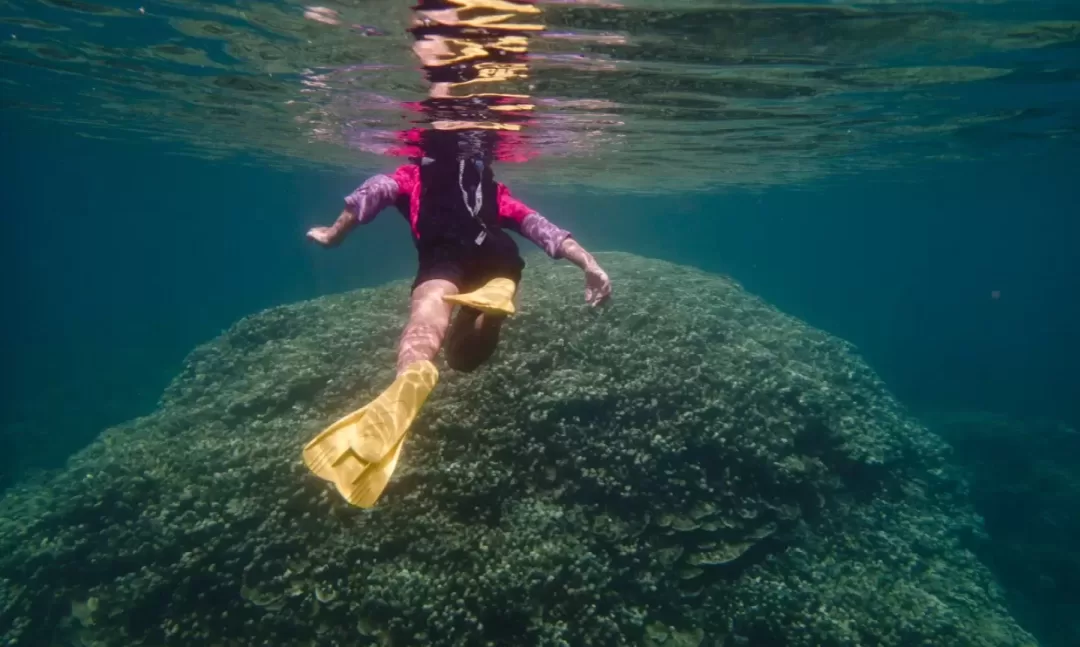
This is our analysis of sea temperature at the Kawaihae Reef during the Super El Niño event in 2026. Our experience is limited to observations of the 2014–2016 El Niño events. We paid attention in those years because the corals in our waters were turning white. In 2014, the impact at Kawaihae was minimal compared with the other Hawaiian Islands. In 2015, the severity differed.
Here are the images of the Kawaihae Reef at the peak of bleaching in September 2015:
2015.9.1
2015.9.09
2015.9.16
2015.09.22
NOAA Coral bleaching watch for Hawaii Island

Kawaihae and the rest of West Hawaii Island are under a bleaching warning. Locally, the sea temperature is not as warm as it was during the same period in September 2015. This is good news for us now.
Sea temperature comparison between 2026, 2015, and 2014 for Kawaihae
NOAA temperature data for this period, between September 1st and 19th, 2026, compared with 2015, show that sea/water temperatures in 2015 averaged 2.5 degrees warmer. Corals globally and in this area were well on their way to total bleaching on September 1st.


On September 12, 2015, the water temperature peaked at 88.2°F, with multiple days above 85°F. So far this year, our peak water temperature was on September 16th at 86.4°F.
Since El Niño may last a couple of years, we also compared this year to September 2014, when that El Niño event began. Interestingly, the 2014 graph closely matches this year’s, with only slight variation. Since this year marks the onset of the Super El Niño event, we may not have seen the worst yet. Mind you, we are amateurs, not scientists, so our analysis is really just an opinion.
When asked how long an El Niño event may last, we found this graphic prepared by NOAA.

Source: NOAA
According to NOAA, the Pacific is expected to see coral bleaching in the summer of 2027.
Conclusion
We witnessed our first global bleaching event in 2015, and it was devastating. Many of our reefs here in West Hawaii have not fully recovered since then. Kawaihae Reef, especially inside the harbor in its protected waters, fared much better and recovered more quickly than others. The worst coral bleaching peaked in mid-September 2015, coinciding with the warmest water temperatures; however, the water cooled in October, and by December that year, coral colonies regained their colors and survived (see more). Losses of cauliflower coral (Pocillopora meandrina) were in the high 90 percent. We observed that Porites corals are more resilient and have recovered well since then.
Discover more from kawaihae reef
Subscribe to get the latest posts sent to your email.